
-
Hungary 100 Millió Pengő 1946 (100,000,000 Pengos) P-124
Regular price From 490 HUFRegular priceUnit price per -
Hungary 1 Milliárd Pengő 1946 (1,000,000,000 Pengos) P-125
Regular price From 490 HUFRegular priceUnit price per -
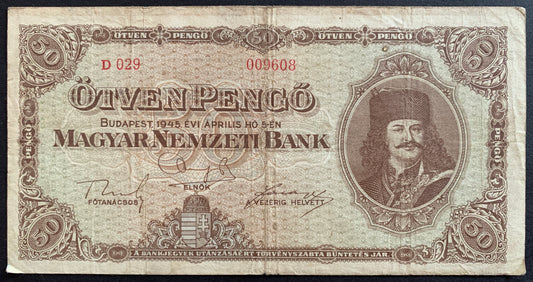
Hungary 50 Pengő 1945 P-110 F
Regular price 690 HUFRegular priceUnit price per -
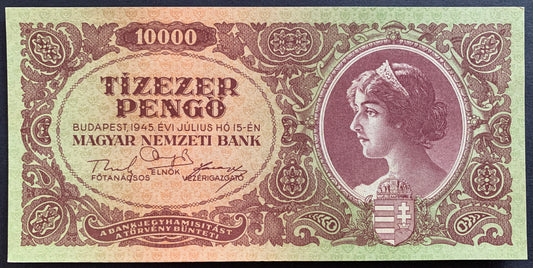
Hungary 10 000 Pengő 1945 P-119a UNC
Regular price 2.790 HUFRegular priceUnit price per -
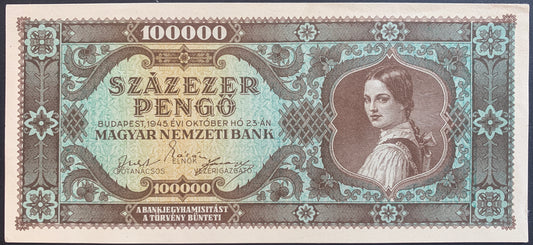
Hungary 100 000 Pengő 1945 P-121a AUNC
Regular price 3.690 HUFRegular priceUnit price per -
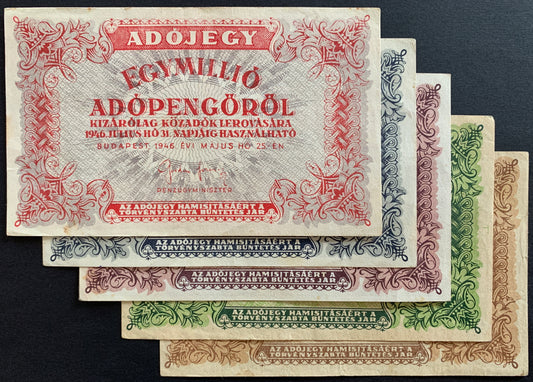
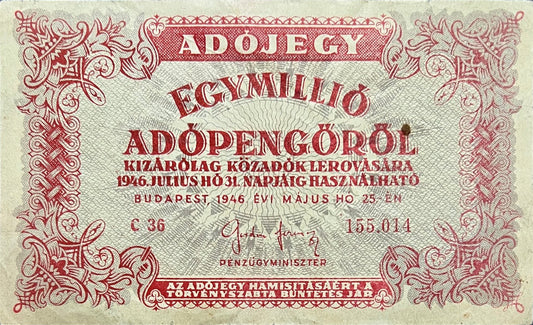
Hungary Adópengő Set
Regular price 4.590 HUFRegular priceUnit price per -
Hungary 1,000,000 Adópengő 1946 P-140 F-VF – Hyperinflation Tax Note
Regular price 4.590 HUFRegular priceUnit price per -
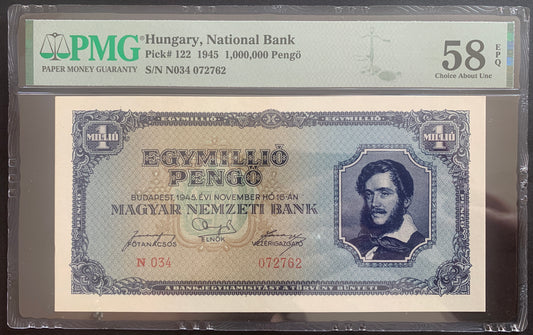
Hungary 1 million Pengő 1945 P-122 PMG 58 choice AUNC EPQ
Regular price 4.690 HUFRegular priceUnit price per -
Hungary 1 billion Pengő 1946 (1,000,000,000 Pengos) P-125 AUNC CONSECUTIVE PAIR
Regular price 4.890 HUFRegular priceUnit price per -
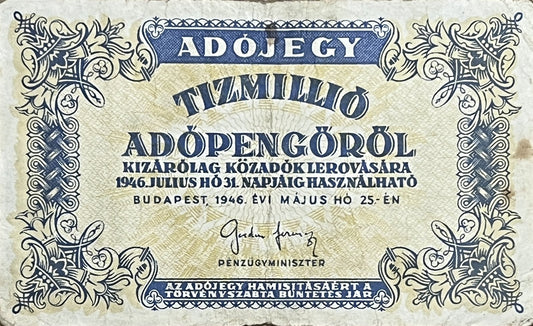
Hungary 10 Million Adópengő 1946 P-141 F – Hyperinflation Tax Note
Regular price 5.990 HUFRegular priceUnit price per -
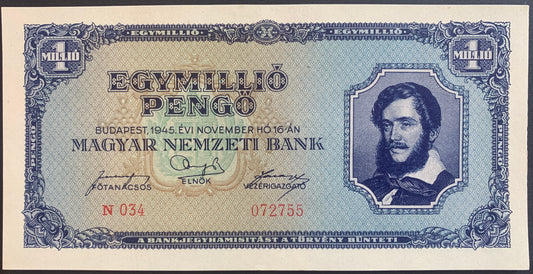
Hungary 1 000 000 Pengő 1945 P-122 UNC
Regular price 6.190 HUFRegular priceUnit price per -
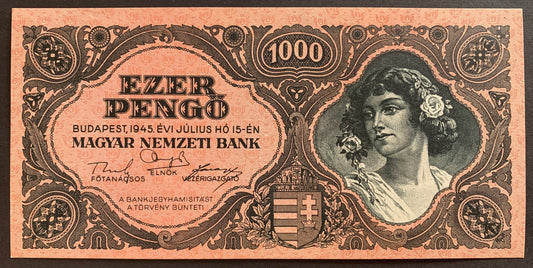
Hungary 1000 Pengő 1945 P-118a UNC
Regular price 6.490 HUFRegular priceUnit price per











About Pengő banknotes
The pengő replaced the korona in 1927 at 12,500 korona to one pengő and was well managed until the war. From 1944 inflation accelerated, and by mid-1946 prices doubled about every 15 hours. To keep up, Hungary added the milpengő (one million pengő) and the B.-pengő (one million milpengő), and also issued the adópengő, a tax unit indexed to prices. The forint replaced it all on 1 August 1946.
See also: milpengő, B.-pengő, Hungary and hyperinflation banknotes.
Collector's guide: Pengő vs milpengő vs B.-pengő – every 1946 Hungarian hyperinflation note explained.
How does Hungary compare? In our guide The Most Extreme Hyperinflation Banknotes, Ranked, Hungary 1946 is number one, ahead of Zimbabwe, Yugoslavia and Germany.
Frequently asked questions
What is an adópengő?
A "tax pengő", an accounting unit introduced in 1946 whose value was adjusted daily for inflation. Adópengő notes were printed for it.
How much was the pengő worth when it ended?
On 1 August 1946 one forint was exchanged for 400 octillion (4 × 1029) pengő.
Collector guides
Before you buy
- How to Buy Banknotes Safely Our checklist: trustworthy sellers, grades, Pick numbers, replicas and fair prices. Read the guide →
- Hyperinflation Banknotes, Ranked The worst inflations in history, from Hungary 1946 to Zimbabwe 2008, and their record notes. Read the guide →
- Pengő vs Milpengő vs B.-Pengő Every 1946 Hungarian note in one table, up to the 100 quintillion pengő record. Read the guide →
- Hungary's 1945–46 Hyperinflation How prices came to double every 15 hours, the worst inflation in history. Read the guide →