
-
Hungary 1 Milliárd Milpengő 1946 P-131 (1,000,000,000,000,000 Pengos)
Regular price From 490 HUFRegular priceUnit price per -
Hungary 100 Millió Milpengő 1946 P-130 (100,000,000,000,000 Pengos)
Regular price From 490 HUFRegular priceUnit price per -
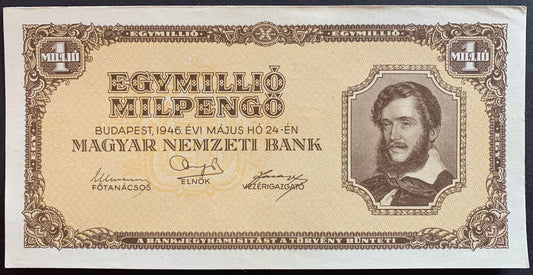
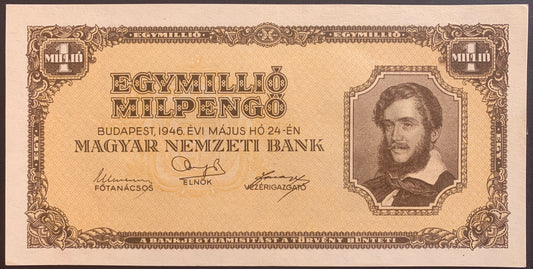
Hungary 1 million MILPengő 1946 P-128 EF
Regular price 2.290 HUFRegular priceUnit price per -
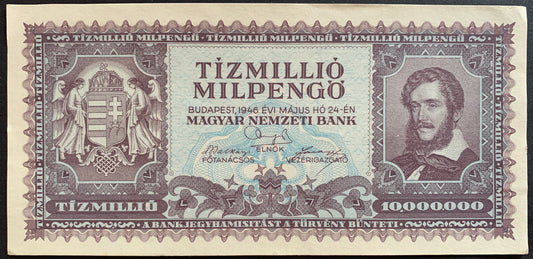
Hungary 10 million MilPengő 1946 P-129 AUNC
Regular price 2.290 HUFRegular priceUnit price per -
Hungary 1 million MILPengő 1946 P-128 AUNC
Regular price 2.790 HUFRegular priceUnit price per -
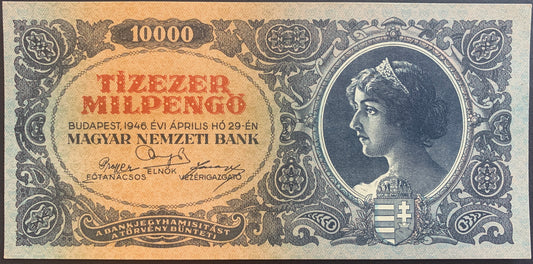
Hungary 10 000 MILPengő 1946 P-126 AUNC
Regular price 3.090 HUFRegular priceUnit price per -
Hungary Milpengő 1946 F-VF – Hyperinflation Bundle
Regular price 5.990 HUFRegular priceUnit price per -
Hungary Pengő Starter Pack – WWII & Inflation Era Collection
Regular price 12.090 HUFRegular priceUnit price per18.490 HUFSale price 12.090 HUF⚡ Extreme Index 8.9Sale






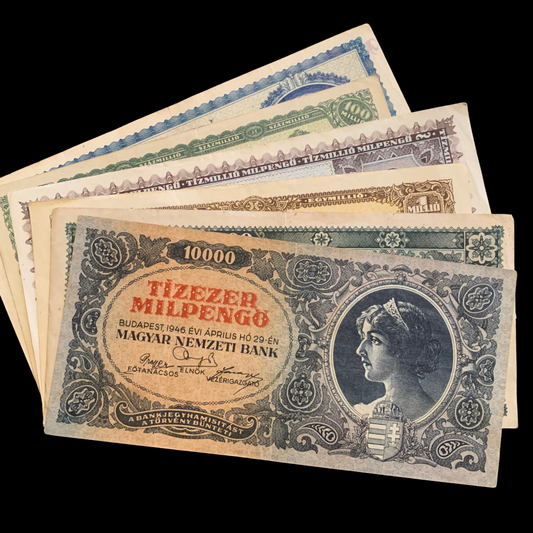

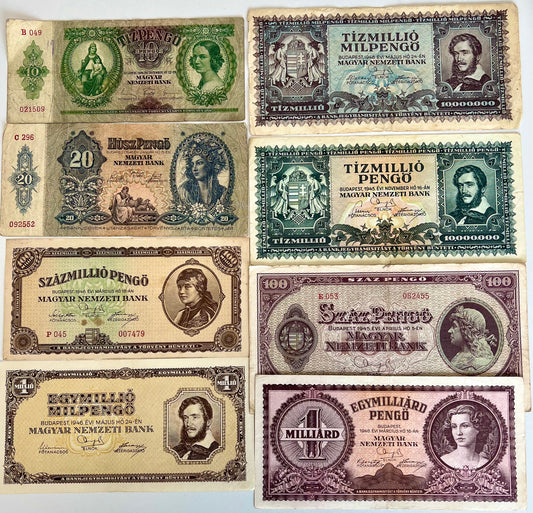
About the milpengő
The milpengő was a stopgap. Its notes, numbered P-126 to P-131 in the Pick catalogue, ran from 10,000 milpengő up to 1 milliárd milpengő, which equals 1015 (a quadrillion) pengő. Within weeks prices had overtaken them too, and the even larger B.-pengő followed. The forint ended the crisis on 1 August 1946.
Explore the whole story in our pengő, B.-pengő and Hungary collections.
Collector's guide: Pengő vs milpengő vs B.-pengő – every 1946 Hungarian hyperinflation note explained.
How does Hungary compare? In our guide The Most Extreme Hyperinflation Banknotes, Ranked, Hungary 1946 is number one, ahead of Zimbabwe, Yugoslavia and Germany.
Frequently asked questions
What is the difference between pengő, milpengő and B.-pengő?
They are the same currency counted in bigger units: 1 milpengő = 1 million pengő, and 1 B.-pengő = 1 million milpengő, or 1012 pengő.
Are milpengő notes valuable?
Most were printed in vast quantities and are affordable, which makes them a good start for a collection. Condition matters most: crisp AUNC and UNC notes are worth noticeably more than folded ones.
Collector guides
Before you buy
- How to Buy Banknotes Safely Our checklist: trustworthy sellers, grades, Pick numbers, replicas and fair prices. Read the guide →
- Hyperinflation Banknotes, Ranked The worst inflations in history, from Hungary 1946 to Zimbabwe 2008, and their record notes. Read the guide →
- Pengő vs Milpengő vs B.-Pengő Every 1946 Hungarian note in one table, up to the 100 quintillion pengő record. Read the guide →
- Hungary's 1945–46 Hyperinflation How prices came to double every 15 hours, the worst inflation in history. Read the guide →