
-
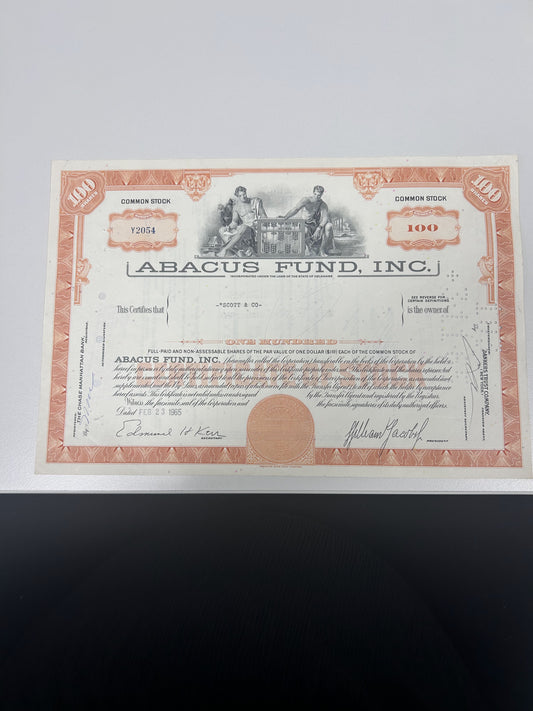
Abacus Fund Stock Certificate 1965 – 100 Shares, Orange
Regular price 4.990 HUFRegular priceUnit price per -
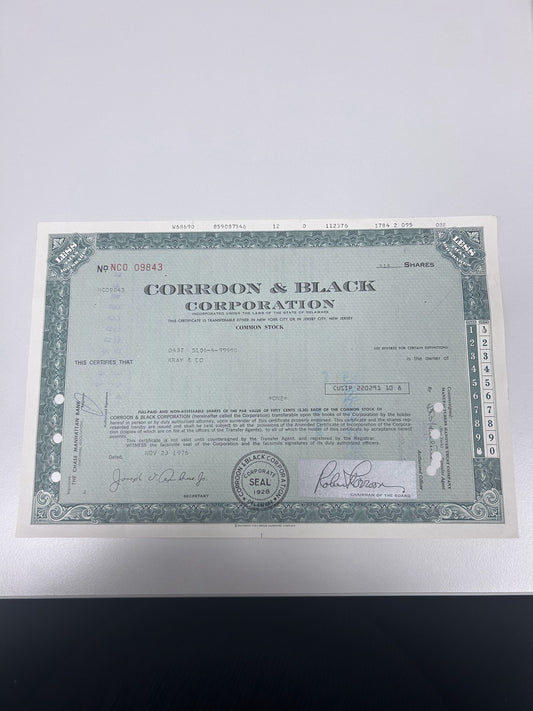
Corroon & Black Stock Certificate 1976 – 1 Share, Green
Regular price 3.990 HUFRegular priceUnit price per -
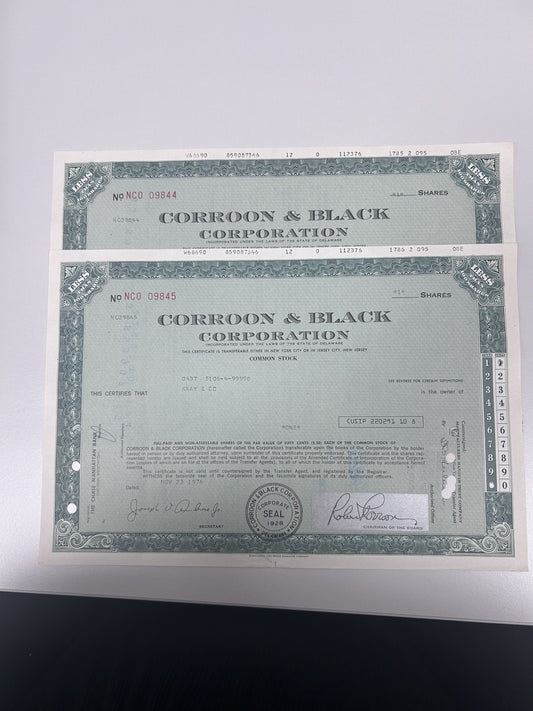
Corroon & Black Stock Certificate 1976 – Consecutive Pair, 1 Share
Regular price 7.290 HUFRegular priceUnit price per -
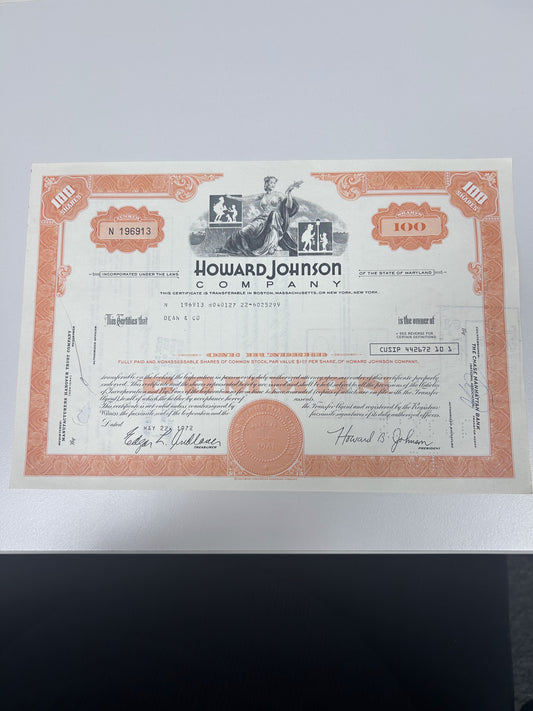
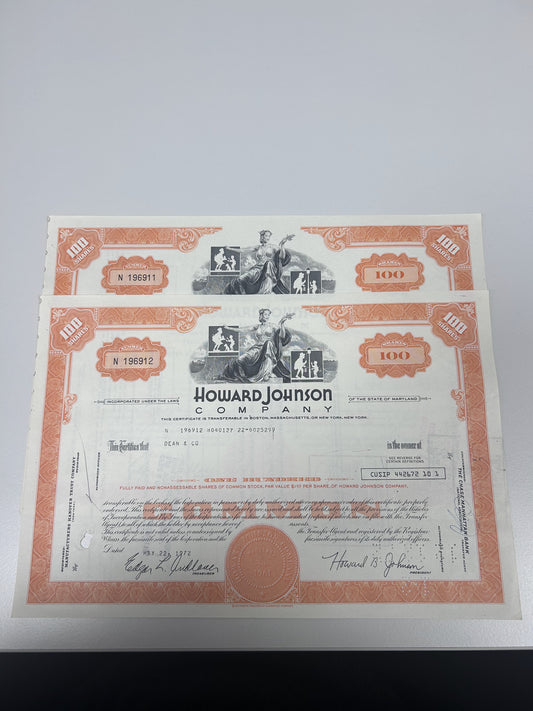
Howard Johnson Stock Certificate 1972 – 100 Shares, Orange
Regular price 5.990 HUFRegular priceUnit price per -
Howard Johnson Stock Certificate 1972 – Consecutive Pair, 100 Shares
Regular price 11.590 HUFRegular priceUnit price per -
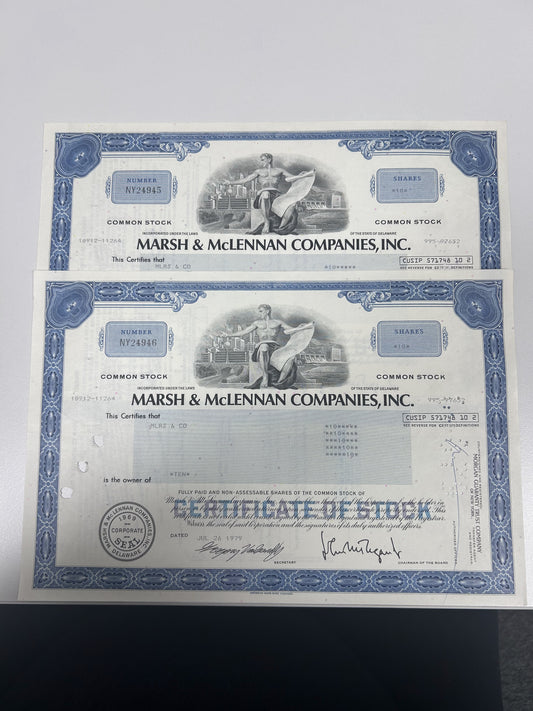
Marsh & McLennan Stock Certificate 1979 – Consecutive Pair, 10 Shares
Regular price 9.590 HUFRegular priceUnit price per






About stock certificates (scripophily)
Before shares were held electronically, owning stock meant holding a printed certificate. Companies had them engraved by security printers such as the American Bank Note Company and the Security-Columbian Banknote Company, the same firms that printed banknotes and stamps, so they share the fine intaglio vignettes, guilloche borders and serial numbers that banknote collectors love. When shares were sold or transferred, the old certificate was cancelled, usually with punch holes and stamps, and these cancelled certificates are what collectors buy today.
Collecting them is called scripophily, from the word "scrip" and the Greek "philos". Collectors look for well-known brands, attractive vignettes, early dates, famous signatures and consecutive serial numbers.
See also: United States of America · Consecutive serial numbers · America
Frequently asked questions
Are your stock certificates genuine?
Yes. Every certificate is an original that was issued by the company and later cancelled by its transfer agent. We photograph the exact certificate you receive, or show every example when we hold more than one.
Do cancelled stock certificates still have any value as shares?
No. A cancelled certificate carries no ownership rights. Its value is purely as a collectible and a piece of history.
Why do the certificates have punch holes and stamps?
Transfer agents cancelled redeemed certificates with punch holes, cuts or stamps so they could not be used again. These marks are normal and show the certificate's real working life.
What does "consecutive pair" mean?
Two certificates whose serial numbers follow each other, issued on the same day. Like consecutive banknotes, they are popular with collectors and make an attractive framed display.
How are the certificates shipped?
Flat, in a protective sleeve with stiff card, so they arrive unfolded and in the same condition as photographed.
Collector guides
Before you buy
- How to Buy Banknotes Safely Our checklist: trustworthy sellers, grades, Pick numbers, replicas and fair prices. Read the guide →
- Banknote Grading Explained What UNC, AU, XF, VF and F mean, with real examples, and how to check a note yourself. Read the guide →
- Pengő vs Milpengő vs B.-Pengő Every 1946 Hungarian note in one table, up to the 100 quintillion pengő record. Read the guide →
- Hyperinflation Banknotes, Ranked The worst inflations in history, from Hungary 1946 to Zimbabwe 2008, and their record notes. Read the guide →