
-
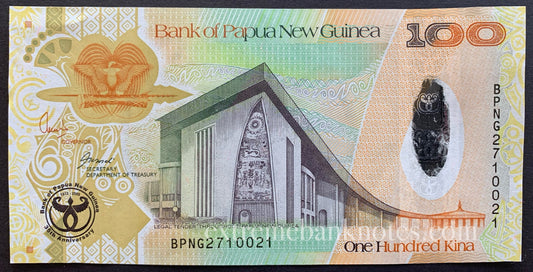
Papua New Guinea 100 Kina 2008 P-37 UNC
Regular price 2.290 HUFRegular priceUnit price per -
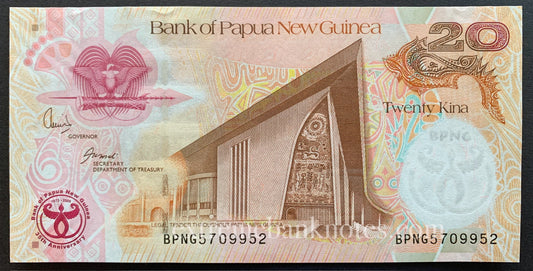
Papua New Guinea 20 Kina 2008 P-36 UNC
Regular price 2.290 HUFRegular priceUnit price per -
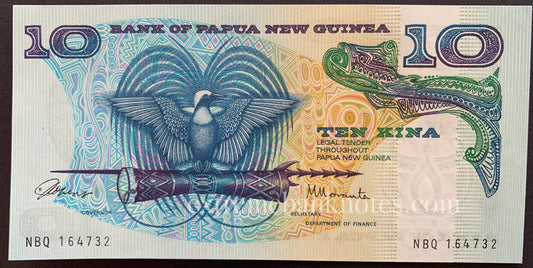
Papua New Guinea 10 Kina ND (1985-1987) P-7 UNC
Regular price 3.490 HUFRegular priceUnit price per -
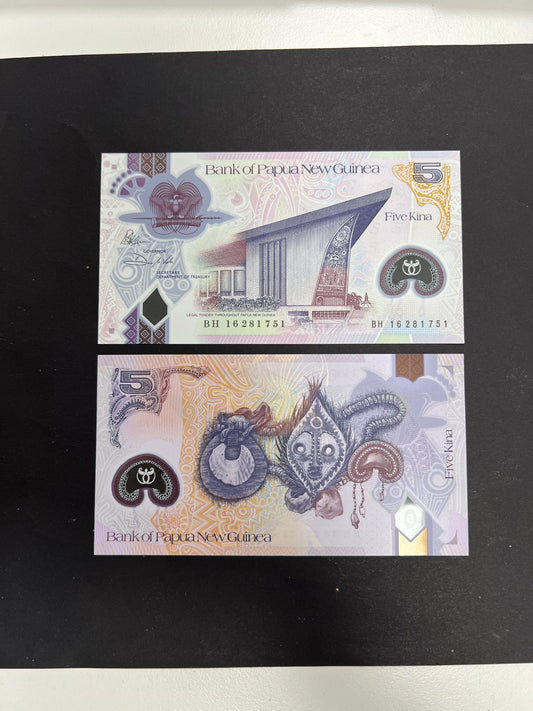
Papua New Guinea 5 Kina 2016 P-51a Polymer UNC – Parliament House
Regular price 3.990 HUFRegular priceUnit price per -
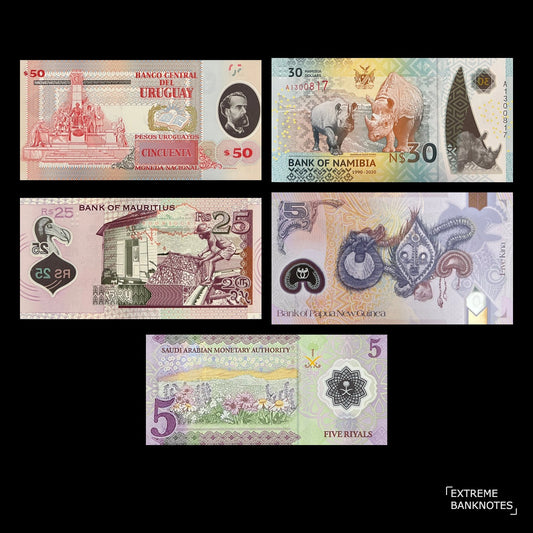
Polymer 5 Banknote Starter Set 2013-2021 UNC – Uruguay, Namibia, Mauritius, Papua New Guinea, Saudi Arabia
Regular price 14.890 HUFRegular priceUnit price per





About Papua New Guinea banknotes
Papua New Guinea introduced the kina in 1975, the year of independence, replacing the Australian dollar. The kina and its subunit, the toea, are named after traditional shell money. PNG was one of the early adopters of polymer and now prints all its notes on plastic.
See also: Oceania, Australia, Solomon Islands and polymer banknotes.
Frequently asked questions
Where does the name kina come from?
From a pearl shell used as traditional money in the highlands of Papua New Guinea.
Are PNG notes polymer?
Yes, Papua New Guinea prints its notes on polymer.
When was the kina introduced?
In 1975, the year Papua New Guinea became independent.
Are your Papua New Guinea banknotes genuine?
Yes. Every Papua New Guinea note we sell is a genuine banknote, never a copy or replica. Each listing states the grade, gives the Pick catalogue number where one exists and shows the front and back, and every order ships tracked from Hungary.
Collector guides
Before you buy
- How to Buy Banknotes Safely Our checklist: trustworthy sellers, grades, Pick numbers, replicas and fair prices. Read the guide →
- Banknote Grading Explained What UNC, AU, XF, VF and F mean, with real examples, and how to check a note yourself. Read the guide →
- Pengő vs Milpengő vs B.-Pengő Every 1946 Hungarian note in one table, up to the 100 quintillion pengő record. Read the guide →
- Hyperinflation Banknotes, Ranked The worst inflations in history, from Hungary 1946 to Zimbabwe 2008, and their record notes. Read the guide →