
-

 Sold out
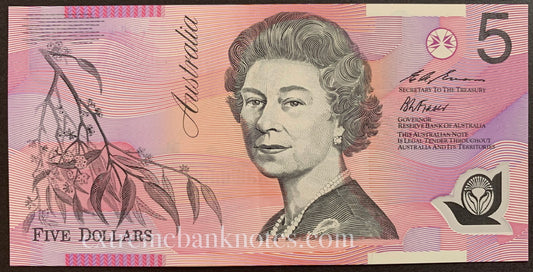
Australia 5 Dollars 1995 P-51a XF
Regular price 2.290 HUFRegular priceUnit price per -
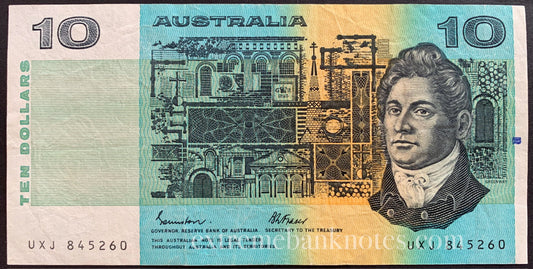
Australia 10 Dollars ND (1984-1989) P-45e VF
Regular price 3.990 HUFRegular priceUnit price per -
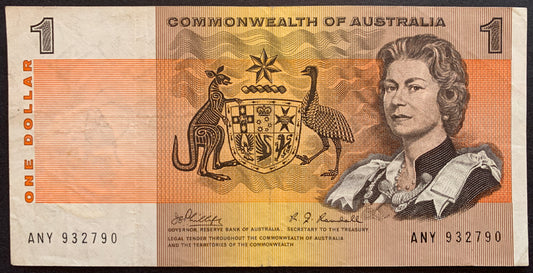
Commonwealth of Australia 1 Dollar ND (1969-1971) P-37c VF
Regular price 4.190 HUFRegular priceUnit price per -

 Sold out
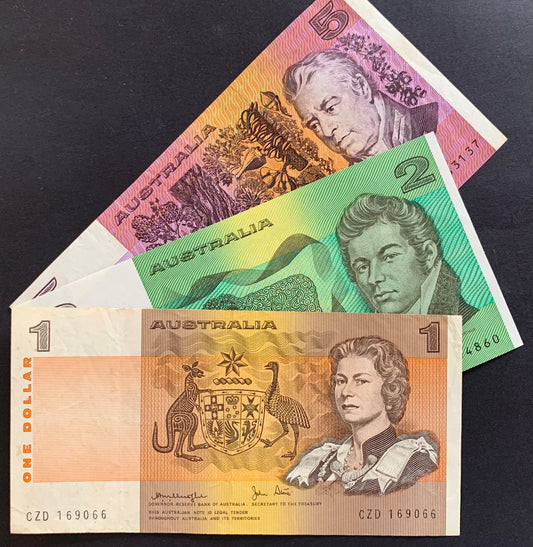
Australia Dollar Set
Regular price 4.390 HUFRegular priceUnit price per -

 Sold out
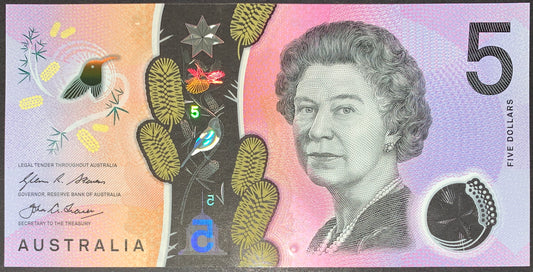
Australia 5 Dollars 2016 P-62a UNC
Regular price 4.390 HUFRegular priceUnit price per -
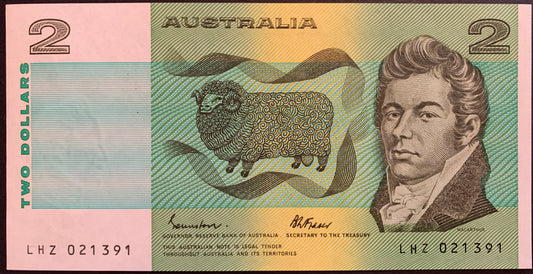
Australia 2 Dollars ND (1985) P-43e UNC
Regular price 5.190 HUFRegular priceUnit price per -

 Sold out
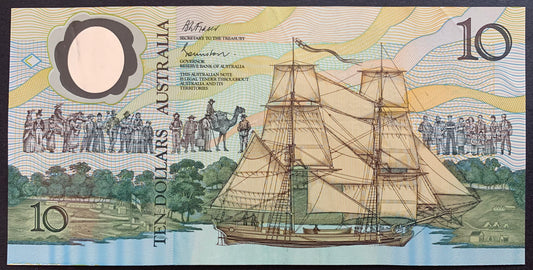
Australia 10 Dollars 1988 P-49 VF
Regular price 5.290 HUFRegular priceUnit price per -
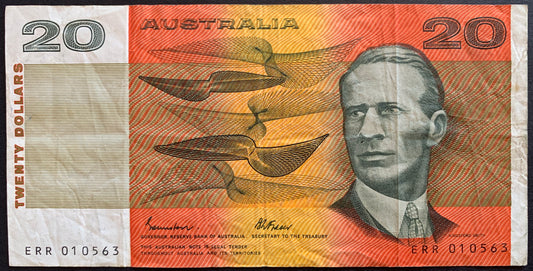
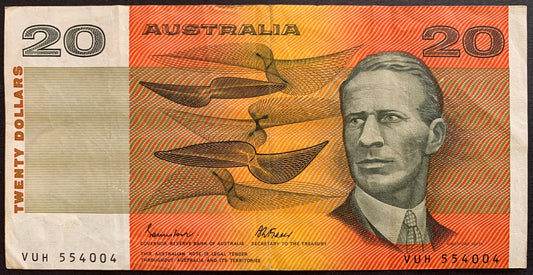
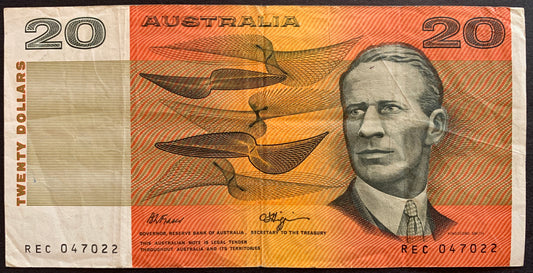
Australia 20 Dollars ND (1984-1989) P-46e VF
Regular price 5.990 HUFRegular priceUnit price per -
Australia 20 Dollars VF ND (1984-1989) P-46e
Regular price 6.890 HUFRegular priceUnit price per -
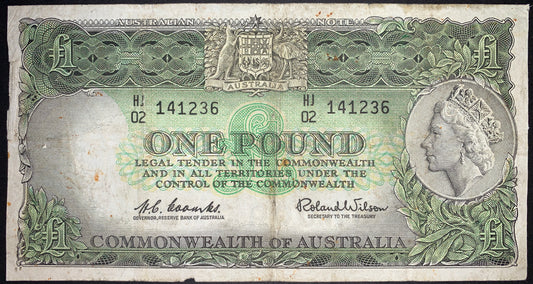
Australia 1 Pound ND (1953-1960) P-30 VG – Pre-Decimal Commonwealth
Regular price 6.890 HUFRegular priceUnit price per -
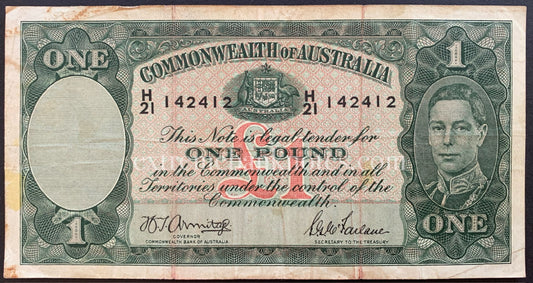
Australia 1 Pound ND (1941-1948) P-26 VF
Regular price 7.090 HUFRegular priceUnit price per -
Australia 20 Dollars ND (1989-1990) P-46g VF
Regular price 7.390 HUFRegular priceUnit price per











About Australia banknotes
Before decimalisation in 1966 Australia used pounds, shillings and pence, issued first by the Commonwealth Bank and from 1960 by the Reserve Bank of Australia. In 1988 the Reserve Bank and the CSIRO launched the world's first polymer banknote, a 10 dollar note for the bicentenary, and by 1996 every Australian note was polymer. A new generation with clear top-to-bottom windows followed from 2016.
See also: polymer banknotes, New Zealand and Oceania.
Frequently asked questions
Did Australia invent the polymer banknote?
Yes. The Reserve Bank of Australia and the CSIRO developed it, and the first one was issued in 1988.
Are old Australian notes still legal tender?
According to the Reserve Bank of Australia, Australian banknotes issued since 1913 remain legal tender, with pre-decimal notes counted at their decimal equivalent (one pound = two dollars). Collectors usually pay far more than that for good examples.
When did Australia switch to decimal currency?
On 14 February 1966, when the dollar replaced the pound.
Are your Australia banknotes genuine?
Yes. Every Australia note we sell is a genuine banknote, never a copy or replica. Each listing states the grade, gives the Pick catalogue number where one exists and shows the front and back, and every order ships tracked from Hungary.
Collector guides
Before you buy
- How to Buy Banknotes Safely Our checklist: trustworthy sellers, grades, Pick numbers, replicas and fair prices. Read the guide →
- Banknote Grading Explained What UNC, AU, XF, VF and F mean, with real examples, and how to check a note yourself. Read the guide →
- Pengő vs Milpengő vs B.-Pengő Every 1946 Hungarian note in one table, up to the 100 quintillion pengő record. Read the guide →
- Hyperinflation Banknotes, Ranked The worst inflations in history, from Hungary 1946 to Zimbabwe 2008, and their record notes. Read the guide →