
-
Lithuania 2 Litai 1993 P-54 VF – Bishop Valančius, Trakai Castle
Regular price 4.290 HUFRegular priceUnit price per -
Lithuania 1 Litas 1994 P-53 VF – Žemaitė, Palūšė Church
Regular price 3.990 HUFRegular priceUnit price per

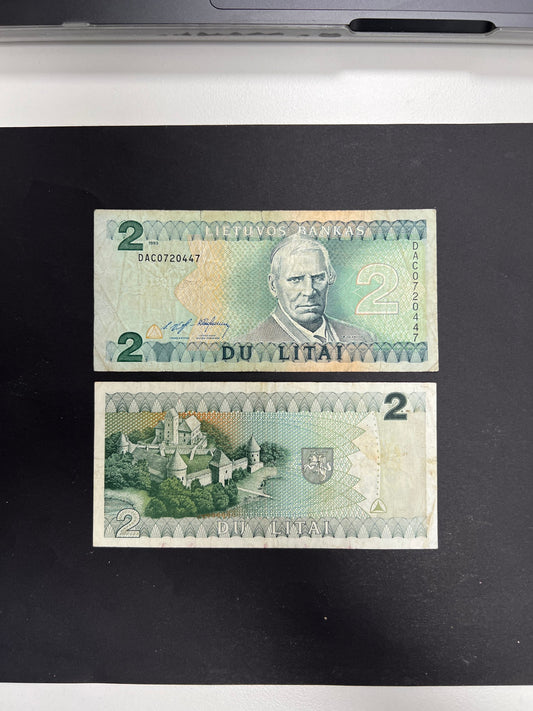

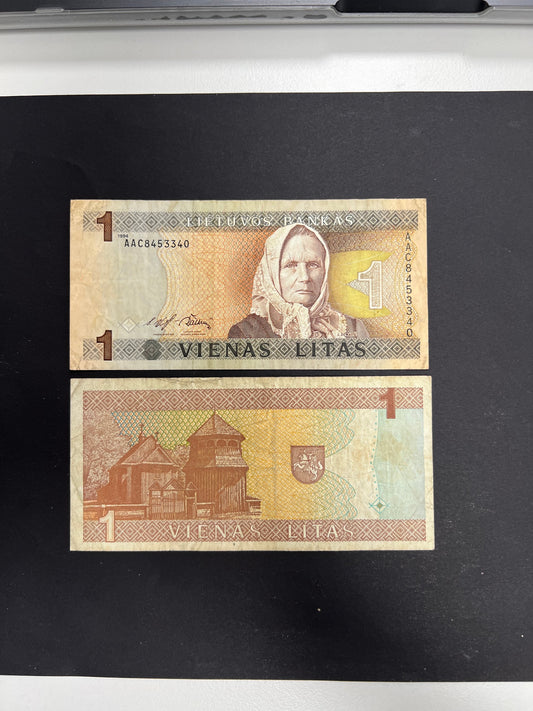
About Lithuanian banknotes
Lithuania introduced the litas on 25 June 1993, replacing the temporary "talonas" coupons that had followed the Soviet ruble. The litas was pegged to the US dollar from 1994 and to the euro from 2002, and on 1 January 2015 Lithuania adopted the euro at 3.4528 litas per euro. The notes honour figures of the Lithuanian national revival, such as the writer Žemaitė and Bishop Motiejus Valančius, with Trakai Island Castle, wooden churches and the national coat of arms on the back.
See also: European banknotes, Latvia, Estonia and Poland.
Frequently asked questions
What was the currency of Lithuania before the euro?
The litas (plural litai or litų), divided into 100 centų. It circulated from 1993 until Lithuania joined the euro on 1 January 2015.
Can litas banknotes still be used?
No, they are no longer legal tender in shops, but the Bank of Lithuania continues to exchange litas banknotes for euros without a time limit.
Are your Lithuanian banknotes genuine?
Yes. Every Lithuanian note we sell is a genuine banknote, never a copy or replica. Each listing states the grade, gives the Pick catalogue number and shows the front and back, and every order ships tracked from Hungary.