
-
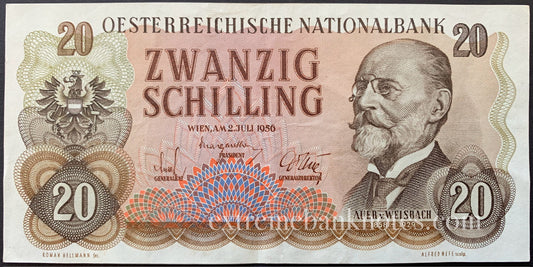
Austria 20 Schilling 1956 P-136 VF
Regular price 2.490 HUFRegular priceUnit price per -
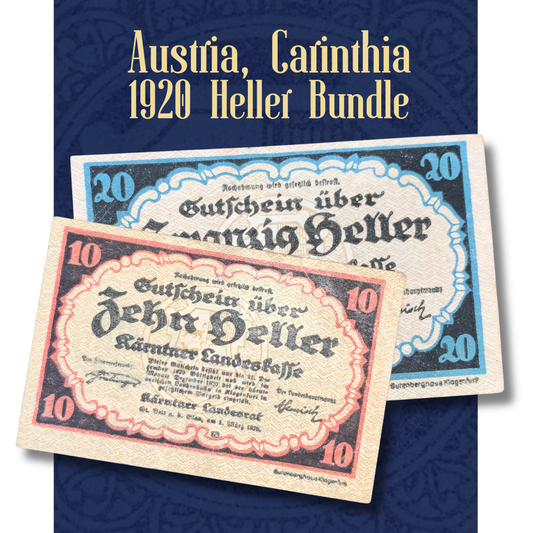
Austria Carinthia 1920 Heller Set
Regular price 3.390 HUFRegular priceUnit price per -

 Sold out
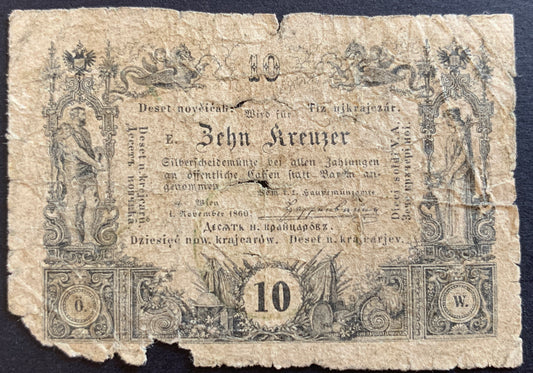
Austro-Hungary 10 Kreuzer 1860 fair
Regular price 5.190 HUFRegular priceUnit price per -
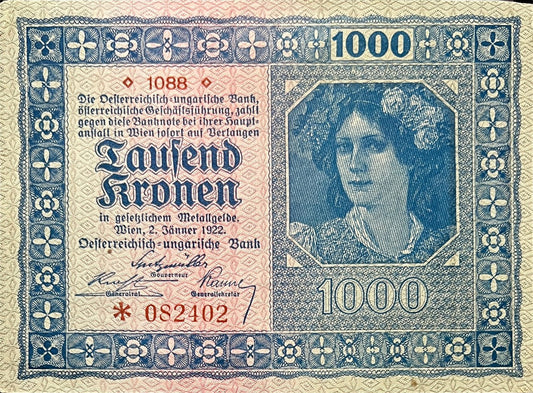
Austria 1000 Kronen 1922 P-78 VF – Austrian Hyperinflation
Regular price 5.790 HUFRegular priceUnit price per -
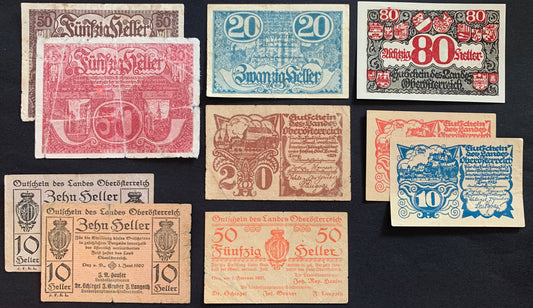
Austria (Upper Austria) Heller Notgeld Bundle
Regular price 6.990 HUFRegular priceUnit price per -
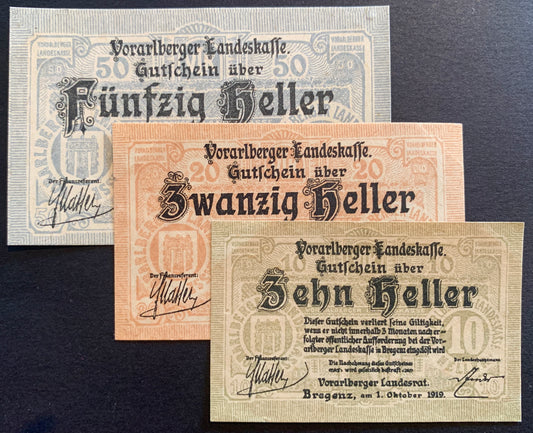
Austria, Vorarlberg Heller Set
Regular price 7.090 HUFRegular priceUnit price per -
Austro-Hungary 1000 Kronen ND (1919) EF+
Regular price 7.490 HUFRegular priceUnit price per -
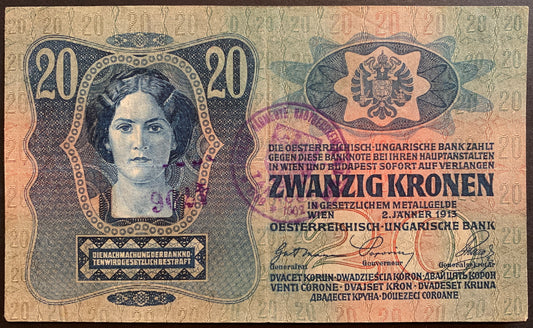
Austro-Hungary 20 Korona 1913 VF overprint
Regular price 7.690 HUFRegular priceUnit price per -
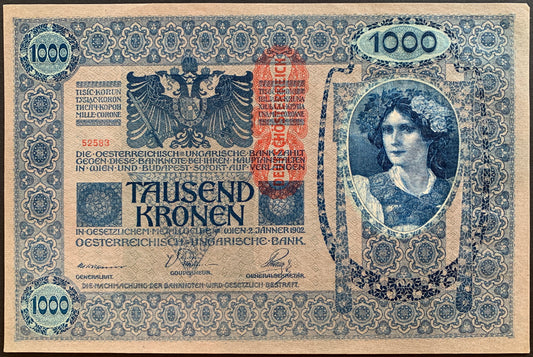
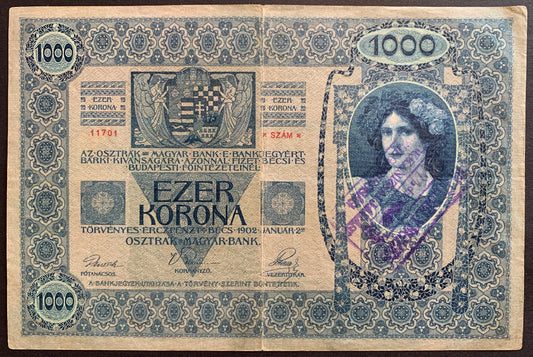
Austro-Hungary 1000 Kronen 1902 VF overprint
Regular price 8.090 HUFRegular priceUnit price per -
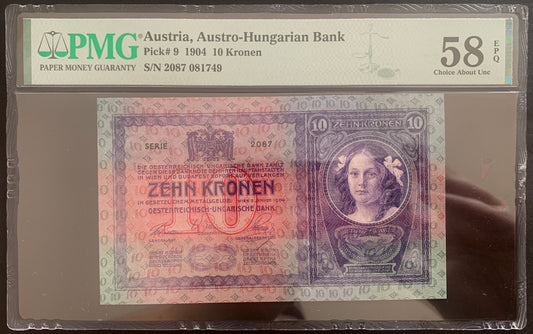
Autro-Hungary 10 Kronen 1904 P-9 PMG 58 choice AUNC EPQ
Regular price 134.590 HUFRegular priceUnit price per










About Austria banknotes
The Austro-Hungarian Bank issued notes in German and Hungarian for the whole empire until 1918. After the empire collapsed, old notes were overprinted for the new Austrian republic, and towns printed their own small-change notes, called Notgeld, in 1919–1921. The schilling followed in 1925 and, apart from the Reichsmark years of 1938–1945, remained Austria's currency until the euro in 2002.
See also: Hungary, Germany, World War I banknotes and vouchers and local notes.
Frequently asked questions
What is Notgeld?
Emergency money printed by towns and regions, mainly in 1919–1921, when small change ran short after the First World War. The designs are often colourful and local.
Why are Austro-Hungarian notes in two languages?
The empire was a dual monarchy, so notes carried German text on one side and Hungarian on the other.
When did Austria adopt the euro?
Euro notes and coins replaced the schilling on 1 January 2002.
Are your Austria banknotes genuine?
Yes. Every Austria note we sell is a genuine banknote, never a copy or replica. Each listing states the grade, gives the Pick catalogue number where one exists and shows the front and back, and every order ships tracked from Hungary.