
-

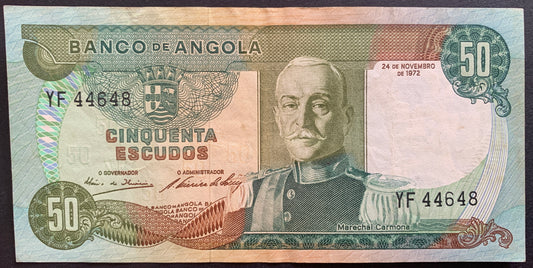 Sold out
Angola 50 Escudos 1972 P-100 VF
Regular price 1.990 HUFRegular priceUnit price per -
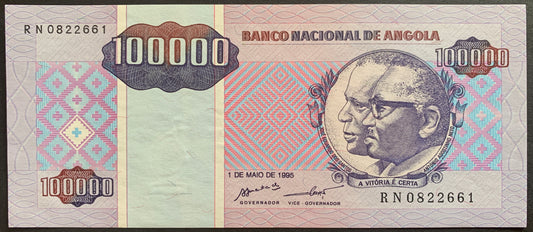
Angola 100 000 Kwanzas 1995 P-139 UNC
Regular price 2.490 HUFRegular priceUnit price per -
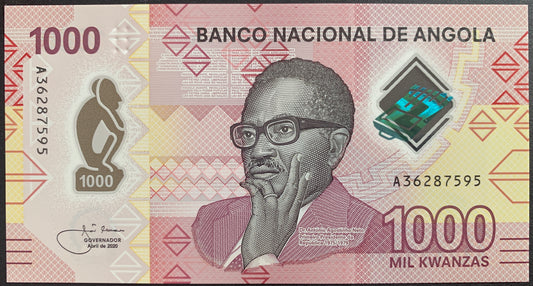
Angola 1000 Kwanzas 2020 P-162 UNC
Regular price 2.990 HUFRegular priceUnit price per -
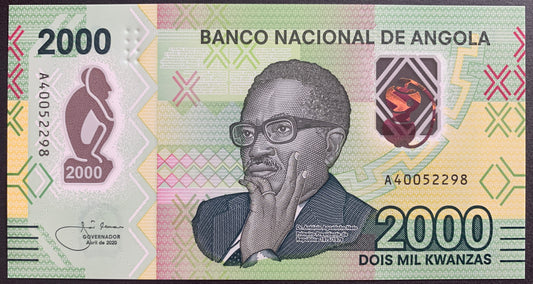
Angola 2000 Kwanzas 2020 P-163 UNC
Regular price 4.990 HUFRegular priceUnit price per -
Angola 100 000 Kwanzas 1991 P-133x VF WATERMARK ERROR
Regular price 8.390 HUFRegular priceUnit price per -
Angola 1000 Escudos 1970 P-98 VF
Regular price 9.490 HUFRegular priceUnit price per





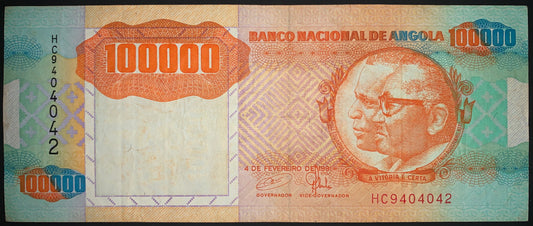

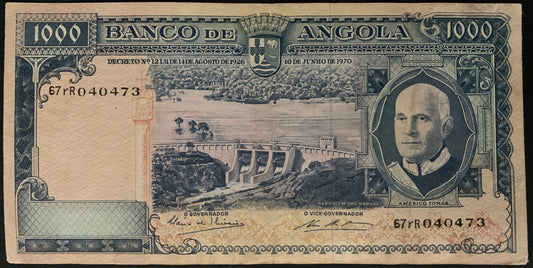
About Angola banknotes
Angola used the Portuguese escudo until 1977, two years after independence, when the kwanza was introduced. Civil war and inflation forced several new versions: the novo kwanza of 1990, the kwanza reajustado of 1995 (1,000 to 1) and today's kwanza of 1999 (1,000,000 to 1). In 2020 the Banco Nacional de Angola began issuing polymer notes.
See also: African banknotes, Mozambique, polymer banknotes and hyperinflation banknotes.
Frequently asked questions
Why does Angola have so many versions of the kwanza?
High inflation during the civil war of 1975–2002 forced the government to replace or redenominate the currency several times, removing nine zeros in total.
Are the 2020 kwanza notes polymer?
Yes, the lower values of the 2020 series, including the 1000 and 2000 kwanzas, are printed on polymer.
When was the kwanza first introduced?
In 1977, replacing the Angolan escudo two years after independence.
Are your Angola banknotes genuine?
Yes. Every Angola note we sell is a genuine banknote, never a copy or replica. Each listing states the grade, gives the Pick catalogue number where one exists and shows the front and back, and every order ships tracked from Hungary.