


Extreme Banknotes
Ghana UNC Bundle
Ghana UNC Bundle
Couldn't load pickup availability
📸 Please Note: We have many of these banknotes in stock. The exact serial numbers and specific wear patterns will vary from the photographs, but the described condition and overall quality remain exactly the same.
A set of five uncirculated Ghanaian cedi notes from 1978 to 2002.
📦 Included Banknote(s):
- 1982 Ghana 2 Cedis (P-18d)
- 1978 Ghana 10 Cedis (P-16f)
- 1980 Ghana 50 Cedis (P-22b)
- 1994 Ghana 500 Cedis (P-28c)
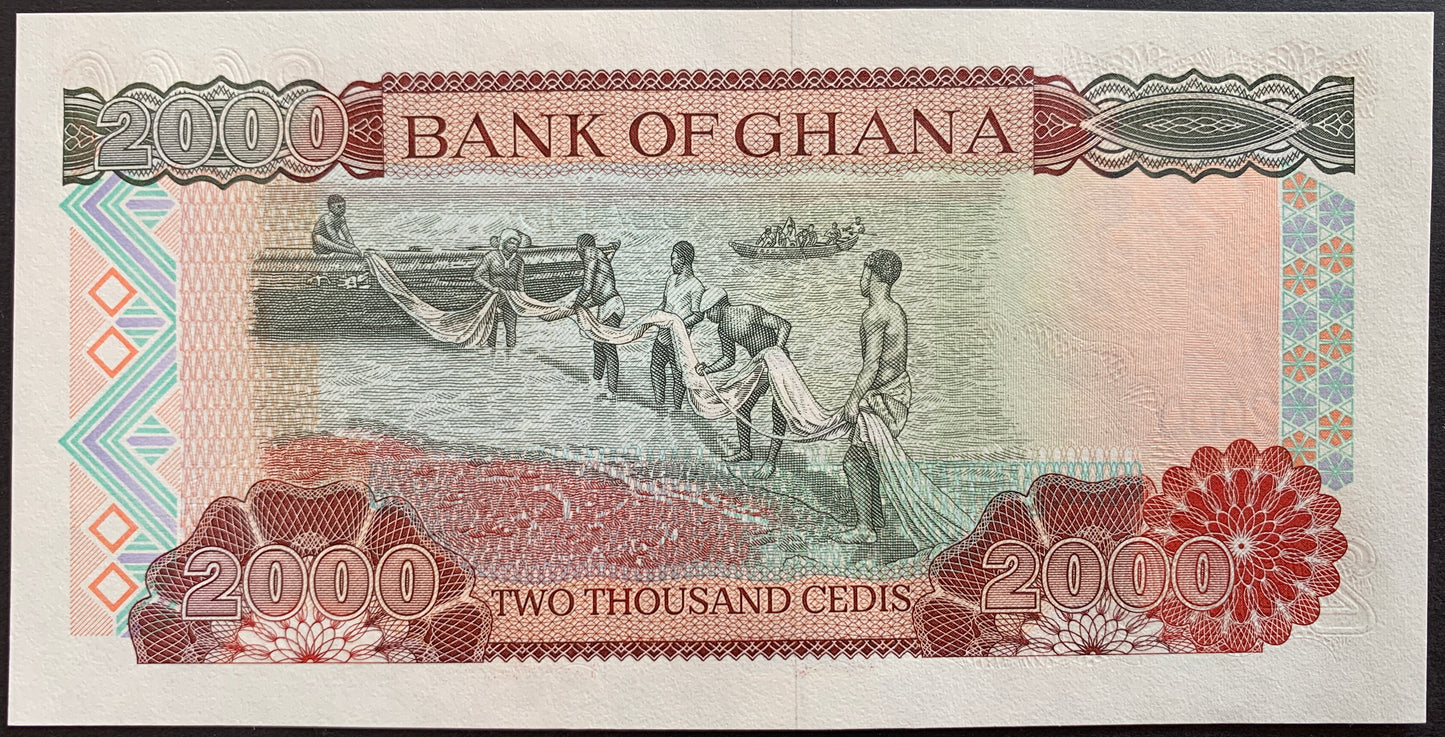
- 2002 Ghana 2000 Cedis (P-33g)
📖 History and Significance:
The second cedi (1967–2007) saw Ghana through military coups, economic crisis and recovery. The rising denominations in this set show the inflation of those decades before the 2007 redenomination at 10,000:1.
🎨 Design Details:
Designs celebrating Ghanaian education, agriculture, cocoa and national development. Please see the photographs for the full design.
🔍 Numismatic Features:
- Material: Paper
- Type: Banknote Set
- Currency: Cedi (1967–2007)
- Country: Ghana
- Issuing Authority: Bank of Ghana
✅ Condition Guide:
UNC (Uncirculated). A crisp, clean note with no folds, creases or signs of handling — it looks exactly as it left the printing press.
🛡️ Why Shop with Us?
🛡️ Why Shop with Us?
100% Guaranteed Authenticity: Every single note is individually verified by our banknote experts.
Secure Shipping: Shipped securely and flat in archival-safe protective sleeves and hard cardboard envelope to avoid any transit bending.
Tracked Premium Dispatch: Dispatched fast from Hungary, using Spring GDS, a worldwide trusted Dutch postal service, with a full door-to-door international tracking.
⭐ Customer Reviews (Etsy)
⭐ Customer Reviews (Etsy)
4.8 / 5 stars from 189 reviews and 697 sales on our Etsy shop.
⭐⭐⭐⭐⭐ "Love my order! Thank you for the quick shipping from so far away. You are a wonderful seller!" – Sharon, Sep 2026
⭐⭐⭐⭐⭐ "Was uncirculated as described. Would like to do business with you again." – Joseph, Sep 2026
⭐⭐⭐⭐⭐ "Beautiful set, perfect UNC as described. Nice and colourful." – Róbert, Sep 2026
⭐⭐⭐⭐⭐ "Pretty good shape for a note from that period." – Joseph, Sep 2026
⭐⭐⭐⭐⭐ "Every thing is good as mentioned keep shopping here." – Gurvinder, Sep 2026
⭐⭐⭐⭐⭐ "Thank you, order as described!" – Shawn, Aug 2026
📜 Shop Policies & Disclaimers
📜 Shop Policies & Disclaimers
Products: All items sold by us are vintage, numismatic collectibles for historical study, collecting and display. They are not sold as current legal tender for circulation, nor do they constitute financial investments or investment instruments.
Authenticity Guarantee: Unless explicitly stated otherwise in the listing title or description:
- All banknotes are guaranteed to be 100% genuine and authentic.
- PMG-graded notes are third-party authenticated and graded by Paper Money Guaranty (PMG).
- Raw (ungraded) notes are meticulously inspected and authenticated by our in-house numismatic experts.
- Any replica, reproduction, or novelty item will always be clearly and prominently labeled.
Images & Descriptions: Our product photography aims to represent each item with maximum accuracy. However:
- Slight color variations may occur due to studio lighting, camera settings, or individual screen displays.
Returns & Refunds:
- To receive a full or partial refund, the buyer must return the item(s) in question to our shop.
- Unless otherwise agreed upon in writing, returned items must be securely shipped back within 30 days of the return request approval.
- The buyer is responsible for taking reasonable care of the item(s) to ensure they arrive in their original condition.
- Return shipping arrangements (including prepaid labels, if applicable under policies) will be clearly communicated at the time of the return request.
📩 Contact Us
📩 Contact Us
Are you searching for a specific banknote to complete your collection? Do you have questions about a piece, our grading, or an existing order? Feel free to reach out to us through Messages, we are always here to assist you!
Share



CONDITION GUIDE
Gem Uncirculated
A note that is flawless, with the same freshness, crispness and bright color as when first printed. It
must be perfectly centered, with full margins, and free of any marks, blemishes or traces of handling.
About Uncirculated
A bright, crisp note that appears new but upon close examination shows a trace of very light use, such as a corner fold or faint crease. 'About Uncirculated' is a borderline condition, applied to a note which may not be quite uncirculated, but yet is obviously better than an average Extra Fine note. Such notes command a price only slightly below a new note and are highly desirable.
Extra Fine
A note that shows some faint evidence of circulation, although it will still be bright and retain nearly full crispness. It may have two or three minor folds or creases but no tears or stains and no discolorations.
Very Fine
A note that has been in circulation, but not actively or for long. It still retains some crispness and is still choice enough in its condition to be altogether desirable. It may show folds or creases, or some light smudges from the hands of a past generation. Sometimes, Very Fine notes are the best available in certain rare issues, and they should accordingly be cherished just as much as uncirculated notes.
Fine
A fine note shows evidence of much more circulation, has lost its crispness and very fine detail, and creases are more pronounced, although the note is still not seriously soiled or stained.
SHIPPING
Tracking information will be provided!
Your banknote will be packaged between two sturdy pieces of cardboard to safeguard its condition during transit, guaranteeing it arrives to you exactly as described. Should you have any inquiries, please don't hesitate to reach out - we're here to assist you!